
Father of Robotics
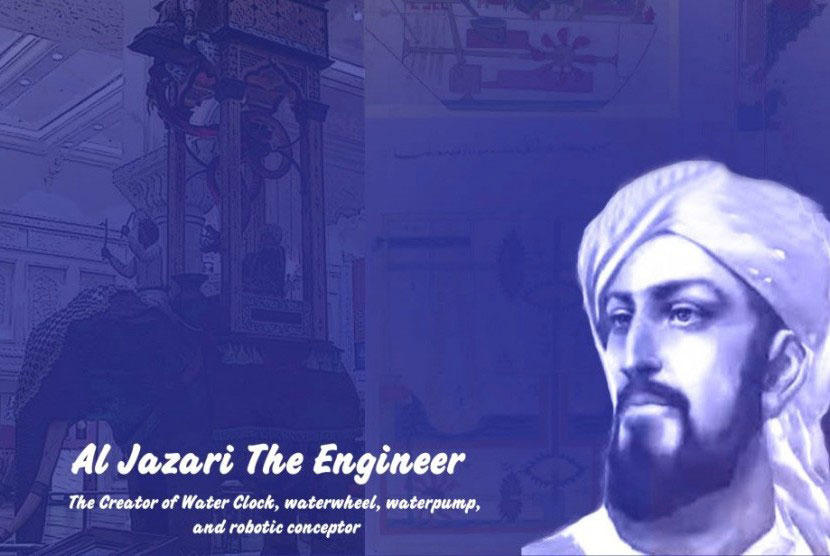
It is very well known that large amount of Greek texts were translated into Arabic language at the time of Abassid Caliphate (8th century to mid 11th century ), primary motivational factor for all these works was the establishment for Bayt – al – Hikma (Hikma – wisdom, Bayt – House, House of Wisdom), and also the library Khizanat – al – Hikma (Khizanat- Treasure, The Treasure of Knowledge). It has been said that close to 4,00,000 (4 lakh) books were translated to Arabic which were kept at library and used for research. Al-Jazari: Badi al-Zaman Abu al-Izz Ismail Ibn-al-Razzaz al-Jazari, who is considered to be the Father of Robotics, was one of the most important Arab scholar, researcher in the Islamic Golden age. He was born in 1136 AD. His books reflect most of his personal life and we don’t posses any other source regarding it. Speciality of this person was that, in recent days all western scholars, scientist, researchers thought that conical valves was the result of Leonardo’s drawing’s but Al – Jazari who existed 2 centuries before Leonardo da Vinci clearly shows them off in his writings, segmental gears was first drawn and conceptualized by Al-Jazari. Not only in mechanical devices his work focussed on “Automation.” Fabulous work done by Al – Jazari: He has done many works, out of which we have focussed on two important devices The Elephant Clock Castle Water Clock Most popular and significant work of Al – Jazari is The Elephant Clock, which is now in display at Ibn Battutah Mall, Dubai, UAE. This is considered to be more importance because this invention was dated back to 1200 AD, about 800 years before. We could really doubt whether what could have been over there (i.e. what kind of resources would be over there) for a person to think of this invention which has tremendous mechanism which would be somewhat difficult for developing even with modern days CNC Machines. The Elephant Clock To know how it works. check the below video: Next important work of Al-Jazari is Castle Water Clock, which not only acts as a clock but does tremendous extra curricular activities like people standing in front of the house and playing trumpets. Castle Water Clock Even this is in display, at Ibn Battutah Mall, Dubai.
Etymology of the word ‘Robot’

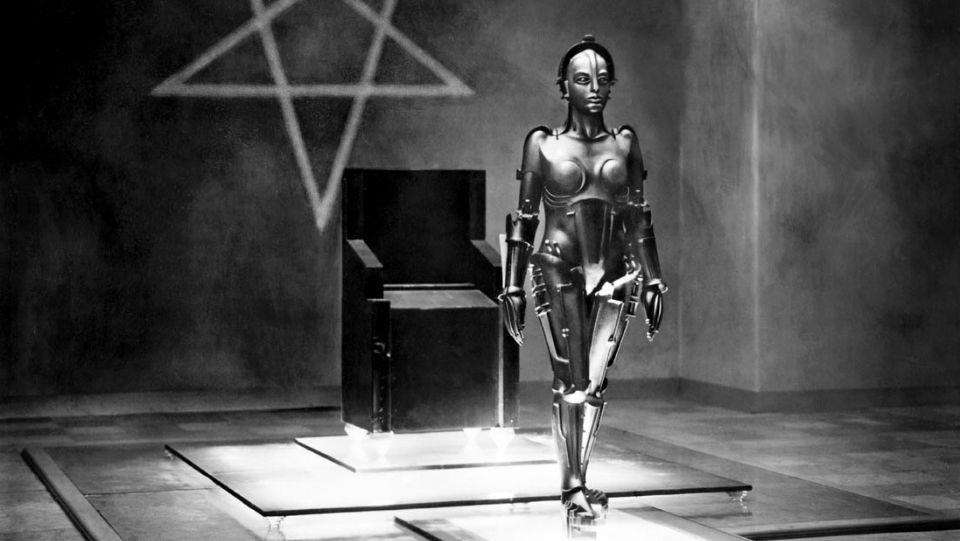
You will never get bored when you ponder on something which you like the most. Am I right? Yes, now we are going back to history without the help of time machine to find out how the word Robot came into existence. In the ancient period, robots were playing a vital role only in science fiction stories. In 1817, Mark Shelley, a novel writer, wrote a story named ‘Frankenstein’ in which there was a character looking like a humanoid monster. There are many instances similar to it where robots were used in stories without using the name Robot. In the year 1920, Robot gets its name for the first time from a Czechoslovakian drama director Karel Capek. Are you excited to know how it happened? Karel Capek had a machine man character in his film and he was not interested to name it as others did. So, he decided to give it a new name and started to search the dictionary of his own language ‘Czech.’ He found a word called “Robota” which means slave or forced labour. He strikes out the final letter ‘a’ from ‘Robota’ and coins the word ‘Robot’ for his machine man characters. Later, he named his drama as Rossum’s Universal Robots (R.U.R). A pic from the drama ‘Rossum’s Universal Robots’ Somehow the name ‘Robot’ started to spread and gets into the movies for the first time in 1927. In this movie, Maschinenmensch Gyroid Humanoid Robots were used, and it created a huge impact for the name. Apart from all these instances, the word ‘Robot’ became more popular after Isaac Asimov, a science-fiction writer, illustrated the Three Laws of Robotics in his story on 1942. Isaac Asimov Robots were dominating in science fiction stories and movies only till 1950, and it was a dream for many scientists to bring robot live to this earth. It actually happened and introduction of robots in the various fields has turned the world to a modern era.
Eye for autonomous robot (Automatic driving Car)
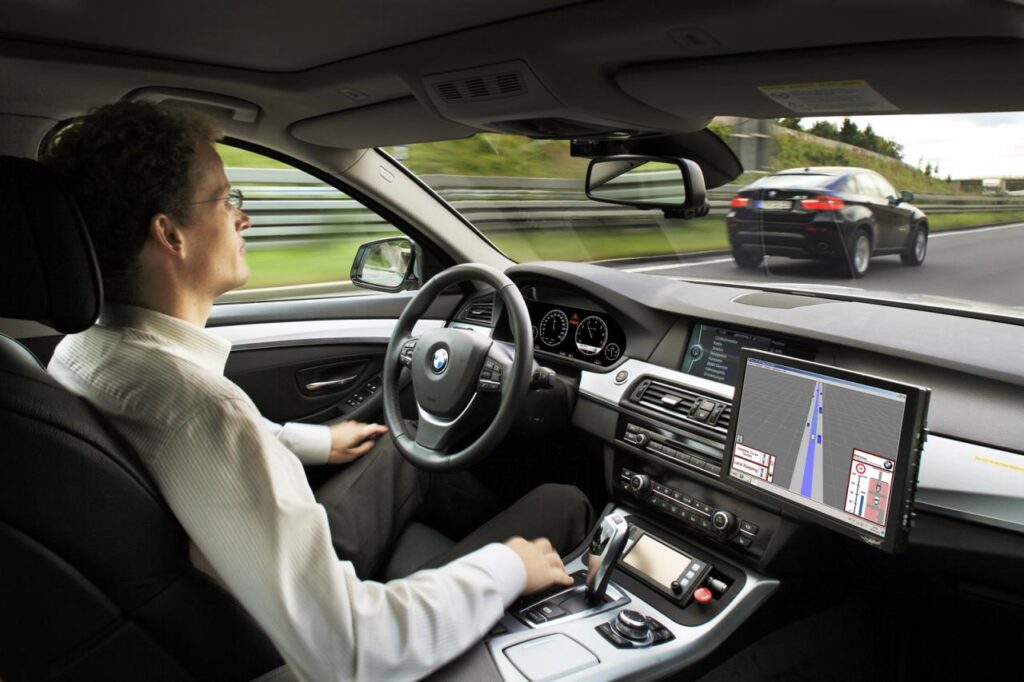
Will cover up a series of articles for this topic, fine, visual guidance for autonomous robot is been divided into two: Unmanned Ground Vehicle(UGV) Intelligent Transport System(ITS) UGV’s are concerned with terrain movement and off-shore navigation. ITS is concerned with efficiency achieved and safer transport in forest and urban ambience, which can be commonly termed as visual guidance. What can it do to robot? Following a road without deviation Obstacle detection Tracking and detection of oncoming vehicles These are related to both UGV and ITS. Fine, will have a look at the main component used in this visual guidance: CMOS (Complementary Metal oxide Semiconductor) is a image sensor, in which you can access individual block of pixels. External circuitry could be added to this imaging for extra features. Other main component used is IR Camera, which detects manhole covers and lamp-posts, and other process for 2D and 3D scanning. But now, we have one common tool for total visual guidance, which is known as KINECT. It has an IR Projector, RGB Sensor, IR Sensor, Microphone array, which actually means that whatever we need as visual guidance is been embedded in KINECT. For doing some image processing using KINECT, we can go for Processing IDE in which you can extract images, and do all process using one component. Then we go into some Artificial Intelligence algorithm like Kalman Filters to update the estimates of camera in vehicle and location feature. We have something known as SLAM (Simultaneous localization and mapping) for fusion of all available data, so that we get a perfect output, but using one kind of concept namely localization has error of 2-5 meters. We use everything from SLAM and Localization algorithm’s of the artificial intelligence to get an exact output for the autonomous robot.
Kinect for Robotics
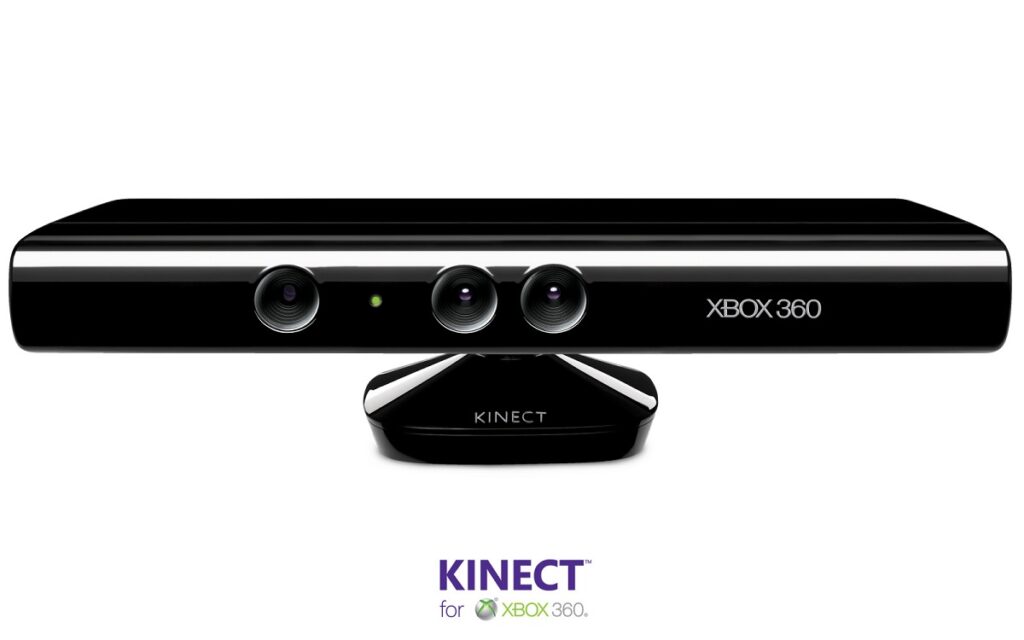
Kinect is a motion sensing input device that was available for military purposes. Now they have decided to make it available for larger masses. Well, the question arises like What is Kinect? Face recognition Depth imaging Gait analysis Skeletonization Actually, the main use of Kinect is to trace out the terrorist hanging around with the general public. We can use it for gestural interfaces using biometrics’ motion capture. Fine, coming to the fact, photo and video processing is being done in computer for a long time. But it’s very much limited and we miss much of resplendent capabilities, which we observe in the human vision system like recognizing body language, differentiating objects in space, able to predict the next destination of a linearly moving vehicle. All these kind of stuff can be done in Kinect. How Kinect can be used in Robotics? You can use Kinect to produce physical objects on a 3d printer in which Kinect acts as a Scanner and creates a humanoid robot, which does whatever you do and many more. The Kinect uses a camera and IR-projector to produce a depth-image of the picture in front of it. It records each pixel of a distant object. When we look at depth images, they look like strangely distorted black and white pictures. Well going into the hardware part, it has: IR Projector RGB Camera IR Camera Do you know? From Irobot to Pixar’s Wall-E peoples use Kinect as the camera for eyes. Well, I forgot to say some important fact. The Kinect is inevitably a Microsoft Product for Microsoft’s Xbox 360 video game system. It is the output from the tremendous research performed by the Microsoft Research Team for many years. In addition, Kinect was an extra-ordinary commercial success. It was sold to about more than 10 million units within one month of its release, making it the fastest selling computer peripheral in history httpvh://www.youtube.com/watch?v=pCbwehXwMX8
Robots from Science Fiction to Reality
We people know what a robot is capable of and it is good to know how robots came into existence. This topic may not be new for some folks, but it might be useful for the younger generations who are very passionate in robotics. UNIMATE – FIRST INDUSTRIAL ROBOT 1817 Talk about robotics started in Science Fiction stories 1921 The name ‘Robot’ was first coined by a Czech Film Director named Karel Capek. The word ‘Robot came from the Czech language ‘Robota’, which means slave or forced labor 1942 Isaac Asimov, a science fiction author wrote three laws of robots in his short story ‘Runaround’ 1954 George Devol and Joseph Engelberger started the world’s first robot manufacturing company called Unimation. They are known as the ‘Father of Robotics’. 1961 The world’s first industrial robot named UNIMATE was used on General Motors assembly line 1980 Robots became a useful machine and widely accepted by many countries 1995 Small and mobile robots were found and it was a second reason for the growth of robotics. 2003 NASA’s Mars Rover created a big turnaround to robotics, and everyone came to know the use of robots. Overall, I believe this info might have given you some ideas on how robots entered this massive world. Hope will be back with a lot more info on robotics. In case, if you have any queries use the below comment section to interact with our robotic experts.
Facts to be considered for Bright Robotic Future
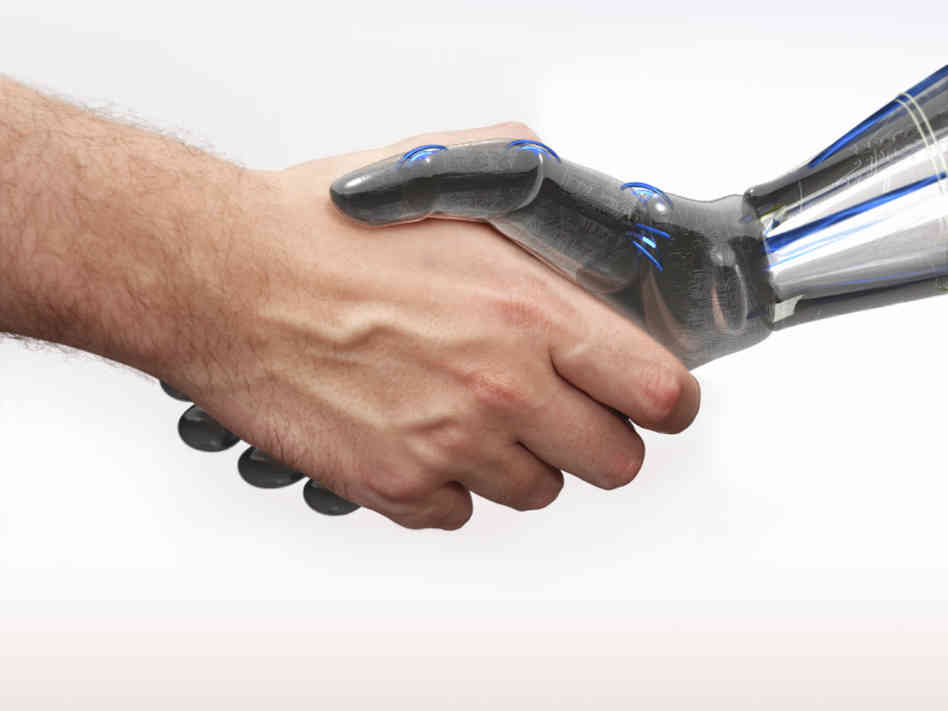
“You just can’t differentiate between a robot and the very best of humans” – Isaac Asimov. Robots are now in a stage where computers were 20 years before. Everyone knows what a robot is capable of and it is clear that it is going to be future. So, what lies behind to bring robots to their best levels? Let’s briefly dig into this topic: Fact #1: Each robotics industry is lacking some of the common standards and platforms. As a result, the robotic researchers are in a position to start from scratch when they start to build a machine. Fact #2: Another fact is building robots to rapidly sense and react to their situations. The current minimization in the cost of processing power and sensors has allowed the robotic researchers to take necessary steps in tackling these problems. Fact #3: Also, the robotic researchers have the advantage of using new software in which they can easily write programs to run various complicated hardware. For example: A robot can be wirelessly connected to a computer for handling some complex tasks like navigation, visual & speech recognition. There are lots to be considered, but I personally feel these three are important to develop an enhanced robotic future.
Black Line Following Robot without Microcontroller
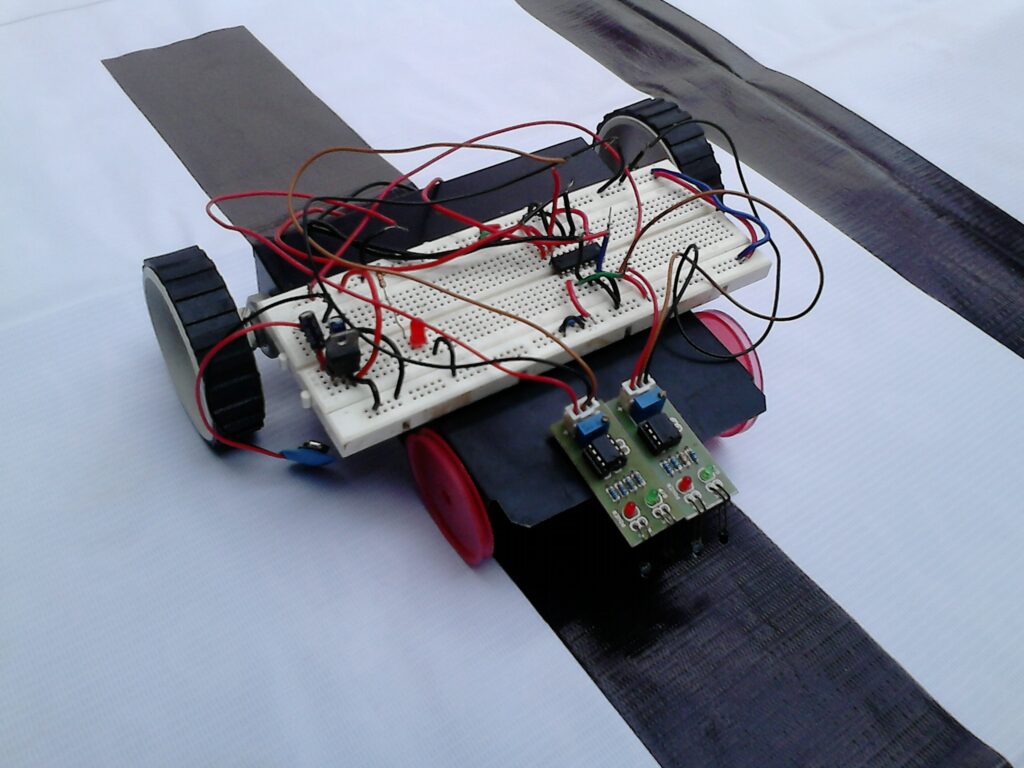
Hi all, Welcome to Jay Robotics Club, Research team. We feel immense pleasure in introducing ourselves, in this very article we shall see about how to build a simple line following robots using very simple IC’s. Before you could start, I will list out the components required.
Nanorobots Could Replace Your Aged Appearance
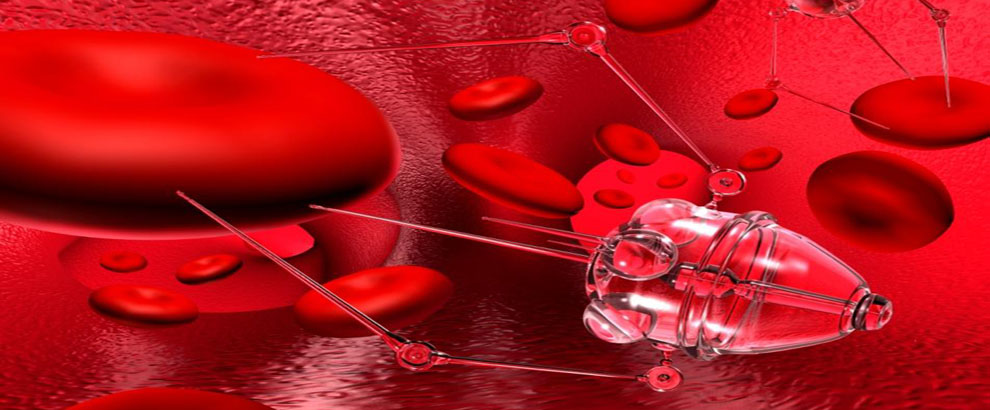
Nanorobots – an emerging technology developed at a size of 10^-9 m is considered as the next level of miniaturization after microrobots. Nanorobots are mainly developed to deal with medical problems like breaking stones in kidney, clearing blockages in coronary arteries, injecting drugs, etc. To make nanorobots more powerful, Robert Freitas – a nanotech pioneer has designed smart bots that could keep you young and healthy even after you get aged.