
Battery
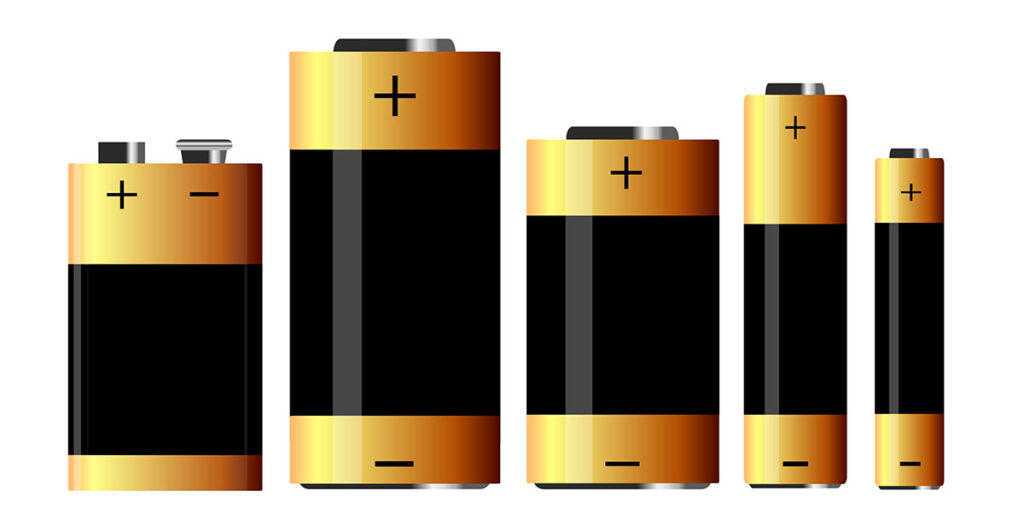
In this section of our tutorial, you will understand about battery capacity, how long will it run, and other parameters. For example if the motor at the no load condition (which means you have not connected to any wheel or any gear to the motor shaft) is consuming 0.2 Amps and you are running the motor using 12 volt 1.3 Ah battery, now the motor will run for [1.3 (Ampere-hour) / 0.2 (Amperes)] will results in 6.5 hours, now theoretically motor will run for 6.5 hours if you run it in no – load condition. But practically as the expert states battery will provide only 70 percent of its full capacity, therefore 1.3 x 0.7 equals 0.91 Ah, then practically it will run for 0.91/0.2 which is 4.55 hours And one more thing to be noted in this section particularly, the amount of amps drawn by a motor would be controlled by itself, even if you feed the motor with high amperage battery, motor will take in the amount of amps it requires leaving the rest. So by this you can understand that a small motor can run even with inverter battery (high amperage battery) without any problem provided the voltage rating is correct.
Direct Current (DC) vs Alternate Current (AC)
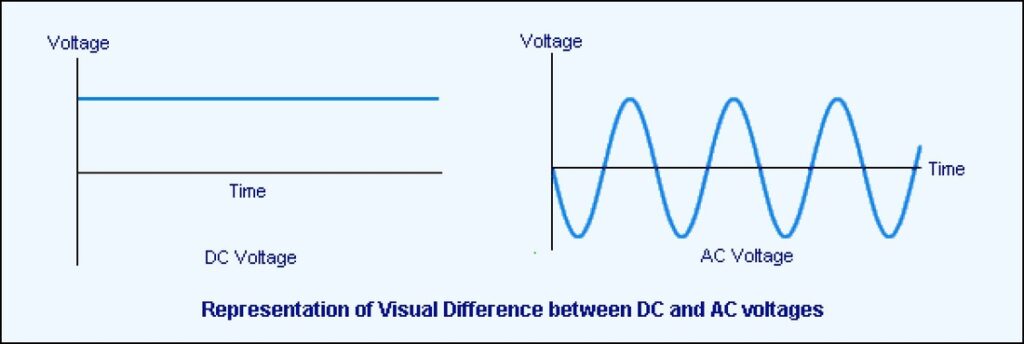
In the line of robotics tutorial, we will see about AC and DC in this section. Almost all electronic components runs on DC, to understand it in simple terms, first let us know about how electrons flow in DC and AC using some small examples. Assuming, we have battery and a motor in which motor is connected directly to the battery after which the motor runs. Now if you watch closely the electron flow, it is very well known that electrons from positive terminal of the battery will flow to the motor and and ends up in the negative terminal of the battery, which is one way mostly. Now to understand AC, assuming we have connected a bulb to the wall socket. Here let us see how electrons flow. At the first phase, electrons will flow in clock wise direction in the circuit as indicated in the video, and in the second phase, the electrons will flow in the counter clockwise direction, since it has a nature of altering its electron flow, which we call it as Alternating Current. Reasons for having AC supply in household are: 1. Transmission loss is less in AC compared with DC 2. Safety for human beings 3. Safety for devices
Examples of Voltage and Current
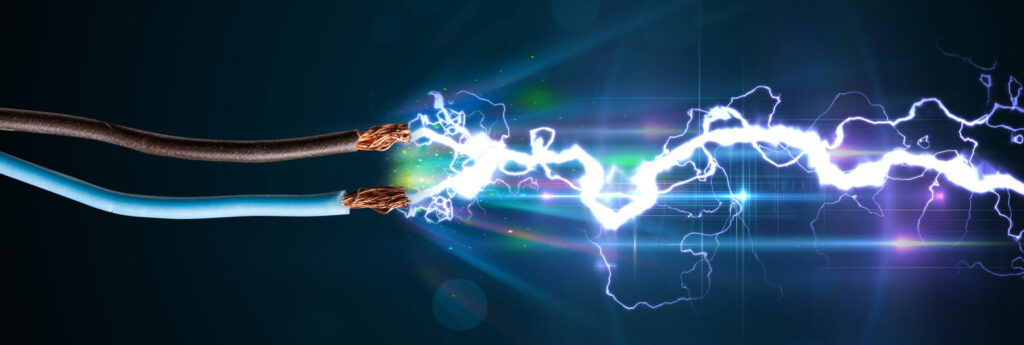
This is been explained using one more example to have deep understanding of the concepts Assume you have a tap and tap has a gate valve, if tap is closed no water will flow and if you open the tap a little, little bit of water comes out, assuming if there is no gravity in the earth, even after you open the tap the water will never come out because gravity is the end device or load which draws the water or current. Like wise only if you attach the load or end device to the battery (source) current flow will occur
Voltage and Current

These are very common terms used in day to day life in electronics world and even in normal world during some instances. But people find it very difficult to conceive or understand the basic principle of this topic. In this video lecture will start the explanation of voltage and current using some examples: In the first example, we have explained the concept of voltage and current using cooking pan experiment. Assuming we are cooking roti’s or chapati’s and after we have cooked about some 10 roti’s or some other number which is bigger than that, the temperature of cooking pan would be more than 100 degrees because water drop over it will evaporate. Let’s assume, it is around 150 degree Celsius and you are going to touch it, once you do it you will feel invisible molecular transfer between yourself and cooking pan, that can be termed as current, and potential of cooking pan is 150 degree Celsius and potential of human body is 36.9 degree Celsius and difference between them is 113 degree celsius as it goes by the dictionary definition here, the difference between the two is voltage i.e. 113 degree is the VOLTAGE (potential difference between two points) and flow of charged particles, i.e. invisible molecular transfer which we felt is current.
SaviOne – The First Delivery Robot for Hotels
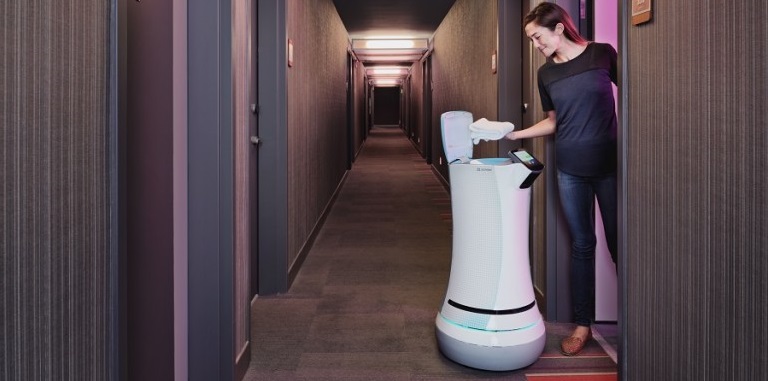
httpvh://www.youtube.com/watch?v=F70He3mVrUQ The above video shows out the trail performance of SaviOne at Aloft hotel in Cupertino. Savioke developed SaviOne to automatically serve the delivery stuffs to the peoples in hotel rooms. It has taken seven months for the company to research and find out the needs of the end users. The company first designed a working prototype and then included new features and redesigned it according to the user opinions. The prototypes has mainly concentrated on the following features: Ergonomic Loading and Unloading User friendly Quick and easy interaction for staff Making fun for guests SaviOne rolls to a hotel for the first time, and travels everywhere in the building to recognize the ways. The staff members in the hotel will have to program where the robot has to go, and the robot is good enough to find out its own way to reach its destination. SaviOne is developed on ROS (Robot Operating System) technology which is managed by the Open Source Robotics Foundation. It boasts a number of sensors to travel around the building including: Depth cameras Sonar & Laser Rangefinders Wi-Fi to communicate with elevators SaviOne is 3 feet high and weighs less than 45 kilograms. It is capable of carrying two cubic feet, and well designed to maneuver at human working place. It is still in experimental phase and hope it serves most of the hotels at the very near future.
KOBIAN – Humanoid Comedian Robot
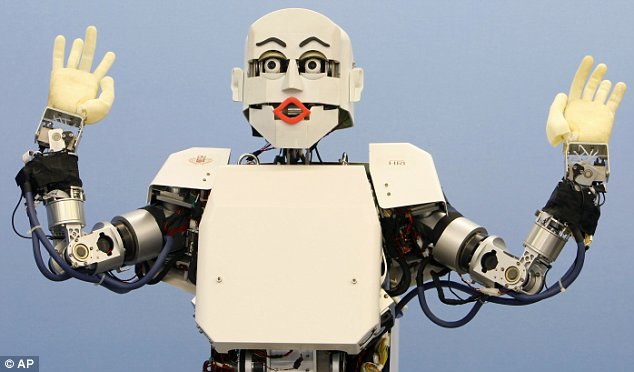
The above video brings you the funny moments of KOBIAN Comedy Robot. This robot was developed by Japanese Researchers at the Waseda University, and it was recently presented in IEEE International Conference on Robotics and Automation (ICRA) 2014. The research team led by Prof. Atsuo Takanishi categorized comedy into three different methods: Funny Behaviours like equivoque, blue jokes, induced laugh, overblown, and sympathetic story Funny Contexts like running gag and unexpected performance Funny Characters like imitation, self-flattery, and self-deprecating humour The researchers appointed some volunteers to find if KOBIAN is really performing funny. They wired up EMG sensors, accelerometers and video cameras facing towards their faces to determine various facial expressions like laugher and smiling. According to the research, the robot was found funny for some moments. But, the researchers were confident in KOBIAN that it will perform better to make people feel better. They were able to sort out this problem with an experiment having POMS (Profile of Mood States) psychological test to access people’s feeling. The result has been a success as it has improved the moods of the volunteers after watching KOBIAN. The next phase of research will be the implementation of complicated dramas with various comedy tricks. They also planned to conduct different experiments in different subjects. Let us wait for some years to check out it enthralling performance.
Boston Dynamics Introduces WildCat
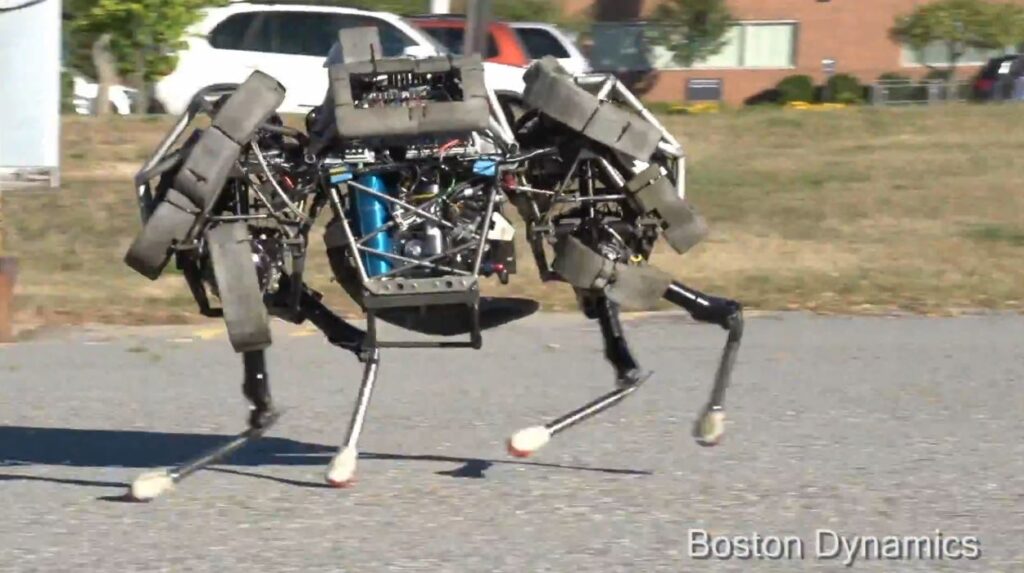
The above video brings you the performance of WildCat – a new robot introduced by Boston Dynamics with the fund provided by DARPA. This robot can run at a speed of up to 25.7 km/h on flat ground.
Introduction to Arduino

The above video brings you the brief introduction to Arduino. Have a look at it to explore your knowledge on how an Arduino works. In addition, if you have various doubts like: What is an analog pin? What is a digital pin? What is PWM? Just get cleared by watching this small introduction video of an Arduino. More videos on the lineup, Stay Tuned.